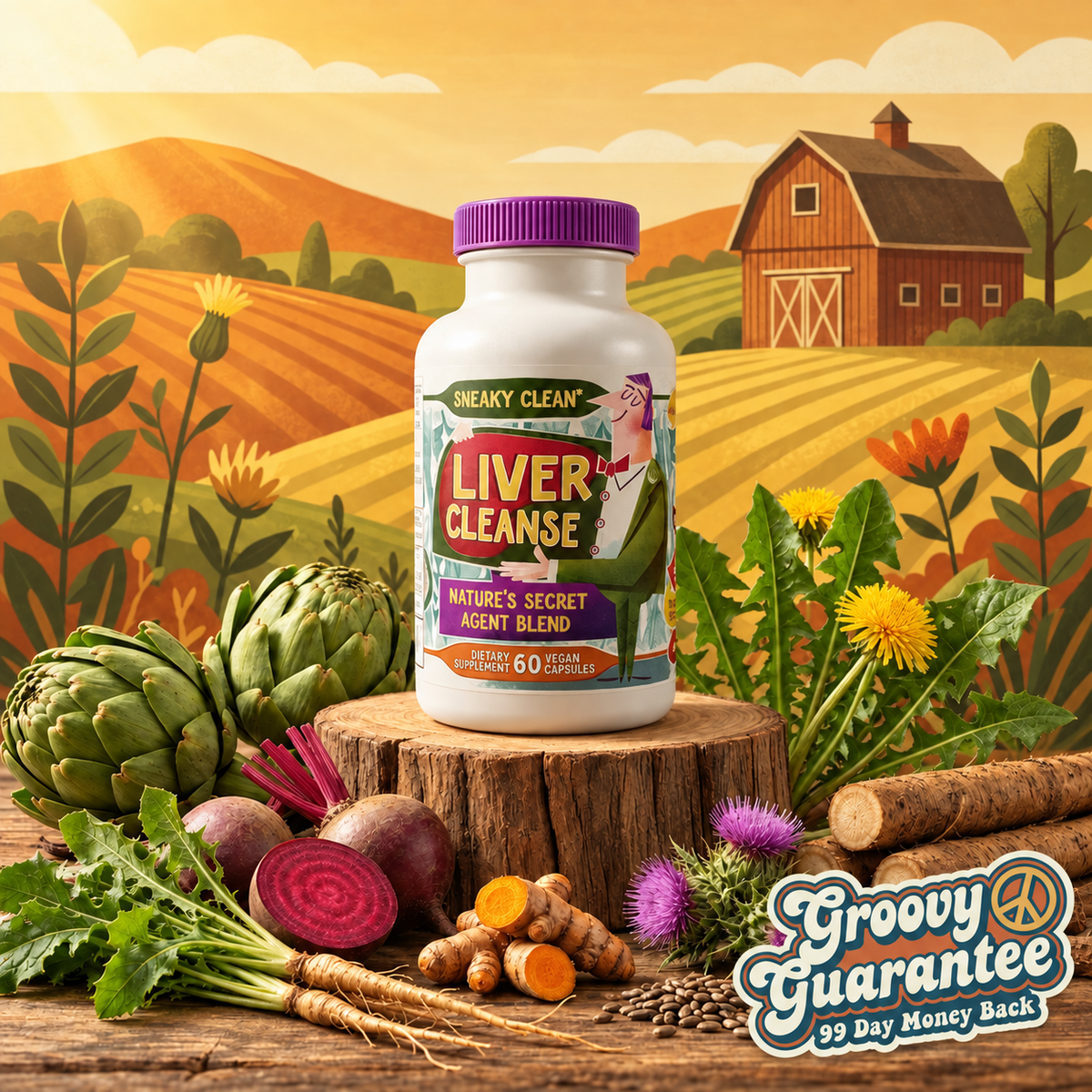
Premium Liver Cleanse & Reset - Liver Detox, Bile Stimulation, Enzyme Support (AST/ALT)
$42.99
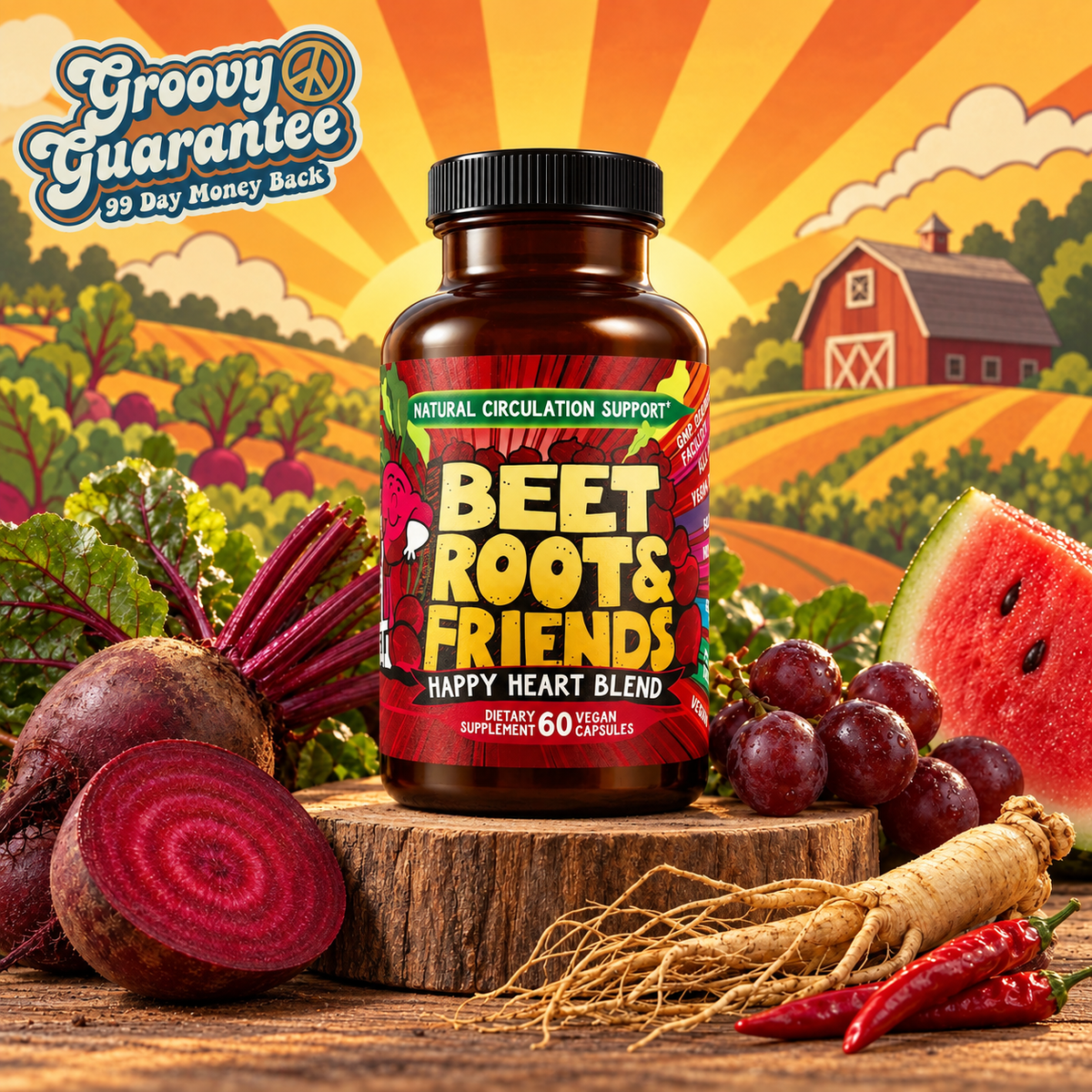
Premium Total Heart & Circulation Blend - Beetroot & Friends
$44.99
Promo code:
Sale savings:
Total savings:
Subtotal:
$0.00
Clinical Studies
The research behind our formulas
Guided by the science. Grown by nature.
Every Hippie Farms formula starts from one belief: nature knows best. Published research is how we honor it. The studies guide which part of a plant we use, in what form, and how much goes in a serving. Nature supplies the ingredient itself. When the only well-studied version of something is synthetic or lab-made, we leave it out.
This page reports what the published studies actually found, providing the why behind each one of our formulas. Nature, backed by science, to assist you on your wellness journey.
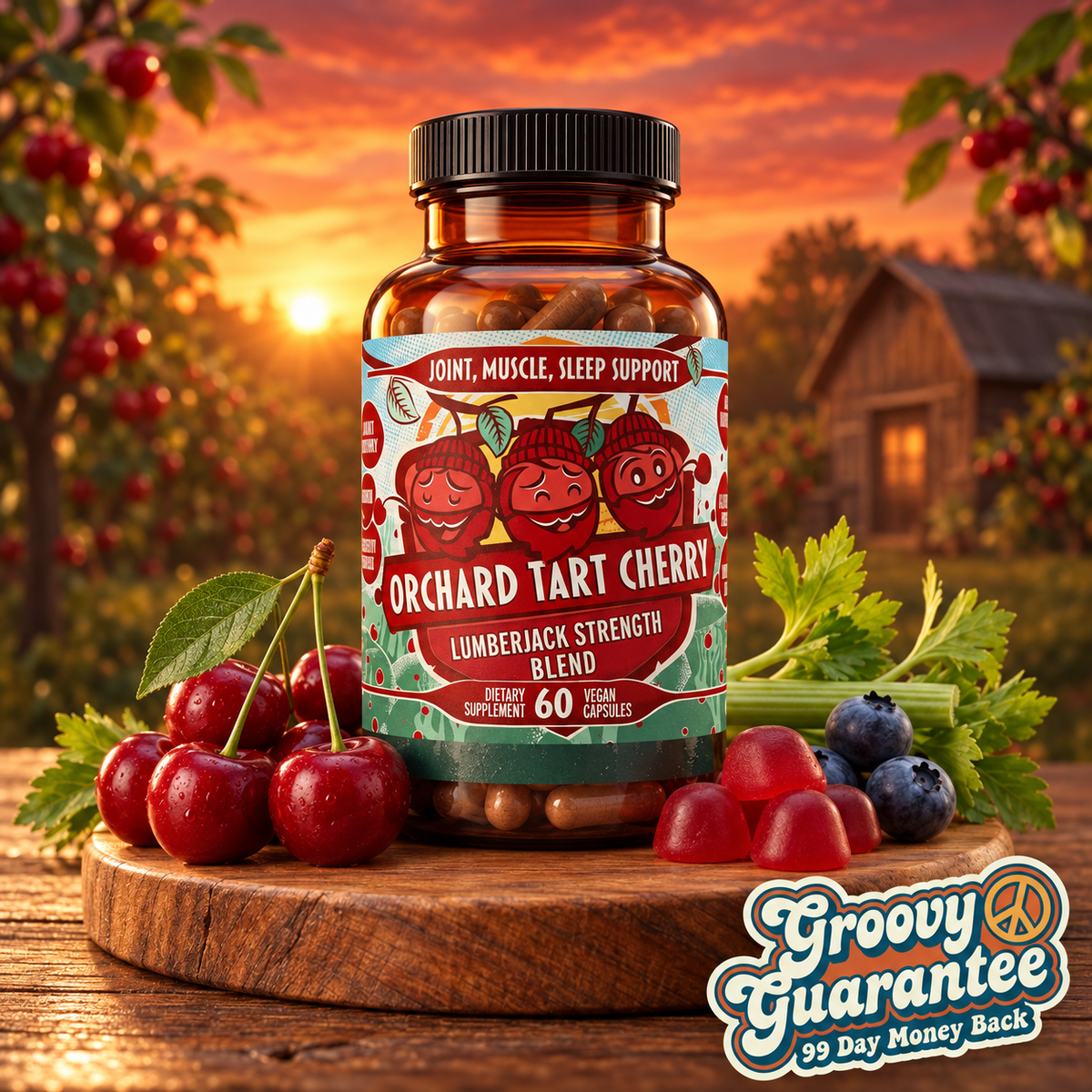
Orchard Tart Cherry
Capsules, one serving (two capsules, once a day): 750 mg CherryPURE® freeze-dried Montmorency tart cherry skin powder, from cherries grown in Michigan · 50 mg celery seed extract · 10 mg bilberry extract.
The gummies use the same CherryPURE® freeze-dried skin powder at 480 mg per two-gummy serving, the amount the published trials used, alongside celery juice powder, bilberry powder and 3 g of added sugar. The powder facts on this page apply to both formats; the 750 mg dose facts are for the capsules.
Why it is built this way
Skin first
Researchers who measured Montmorency cherries by part found the anthocyanins in the skin. The flesh came back with none detectable, the skin carried 36.5 mg per 100 g, and the skin held close to twice the total polyphenols of the flesh.[1] A 2026 study of sweet cherries, a different species, found the same pattern, with several times more anthocyanin in the skin than in the flesh.[2] The pigment is the point, so the powder in both our capsules and our gummies is made from the skin.
Gently freeze-dried
The powder in our capsules and gummies is CherryPURE®, the same freeze-dried Montmorency skin powder used in the published human trials on this ingredient.[3,4] Heat never touches the cherries during processing. Using the form the research used means the trial results describe the material in the capsule rather than a different product with the same fruit on the label.
Weighed, not multiplied
A capsule serving holds 750 mg of that powder and a gummy serving 480 mg, each printed as the weight in the serving rather than a cherry-equivalent figure. A 2021 review found that more than half of the published tart cherry supplementation studies never characterized the batch they actually tested.[5] We would rather print what we weighed. The published trials on this powder used 480 mg a day.
What the studies found
The big picture first. In 2018, USDA nutrition scientists reviewed 29 published human studies on cherries, two-thirds of them randomized and placebo-controlled, most of them under two weeks long.[1] By the review's own count, 11 of the 16 studies that measured inflammation found cherries lowered it, and 8 of the 9 that measured exercise soreness and strength loss found a benefit.
Recovery after hard exercise: the strongest evidence, and it used our exact powder
Texas A&M, 2015: 23 resistance-trained men took 480 mg a day of CherryPURE powder for ten days around a heavy squat session. They reported lower quad soreness 24 hours later than the placebo group (p = 0.024).[3]
Texas A&M, 2016: 27 endurance runners took the same 480 mg a day for ten days around a half marathon. Pre-race soreness was 34% lower than placebo, and inflammatory markers ran 47% lower over the study period.[4]
Disclosure: the makers of CherryPURE supplied the powder for both trials and helped fund the 2016 study.
A 2021 analysis pooled 14 tart cherry studies, mostly juice and concentrate. It found a moderate benefit for recovery of muscle strength, a small benefit for soreness, and small reductions in the inflammation markers CRP and IL-6.[6]
What we say about Orchard Tart Cherry: it supports the body's normal muscle recovery after hard exercise.*
Joint comfort and everyday inflammation
A 12-week University of Delaware trial in 37 adults aged 65 to 80: 480 mL of tart cherry juice a day lowered CRP compared with a control drink (p = 0.03).[7]
What we say: it supports joint comfort and a healthy inflammatory response.*
Uric acid
Arizona State, 2019: 26 overweight and obese adults drank 8 ounces of 100% tart cherry juice a day for four weeks in a placebo-controlled crossover. Serum uric acid fell 19.2% from the start of the juice period, with no drop on the placebo drink.[8]
A 2026 meta-analysis pooled four randomized trials (392 participants) and found a reduction in serum uric acid with tart cherry (standardized mean difference −0.22, 95% confidence interval −0.43 to −0.01).[9]
A 2019 systematic review of six studies found that people with gout who regularly took cherry juice or cherry extract had fewer flare-ups than those who did not, and linked tart cherry juice with lower serum uric acid. The authors concluded that cherry intake is associated with a lower risk of gout attacks.[10]
Boston University, 2012: researchers followed 633 people with gout for a year. Cherry intake over a two-day window was associated with a 35% lower risk of an attack. Observational, with fresh cherries and cherry extract.[11]
What we say: it supports healthy uric acid levels already within the normal range.*
Sleep
Montmorency tart cherries naturally contain a trace of melatonin, measured at about 13.5 nanograms per gram of fruit.[12] Nothing synthetic is added.
The other two ingredients, and why the amounts are what they are
Celery seed, 50 mg. Celery seed has been paired with cherry for generations by people who worked it out on their own. It contains luteolin and apigenin, the compounds it has long been known for.[13]
Bilberry, 10 mg. Bilberry is one of the most anthocyanin-dense berries there is, at 300 to 700 mg of anthocyanins per 100 g of fresh fruit, and it keeps its color in the skin the same way the cherry does.[14] It is in the formula for the anthocyanin profile of the blend.
Every product's published third-party test results are on our testing page.
Kelley DS, Adkins Y, Laugero KD. A review of the health benefits of cherries. Nutrients. 2018;10(3):368. PubMed 29562604. The Montmorency skin and flesh measurements it reports are from Chaovanalikit A, Wrolstad RE. Anthocyanin and polyphenolic composition of fresh and processed cherries. Journal of Food Science. 2004;69:C73-C83. doi:10.1111/j.1365-2621.2004.tb17859.x.
Mihályfi C, et al. Tissue-specific anthocyanin and polyphenol content in sweet cherry (Prunus avium L.). Molecules. 2026;31(10):1732. PubMed 42197286.
Levers K, et al. Effects of powdered Montmorency tart cherry supplementation on an acute bout of intense lower body strength exercise in resistance trained males. Journal of the International Society of Sports Nutrition. 2015;12:41. PubMed 26578852. doi:10.1186/s12970-015-0102-y.
Levers K, et al. Effects of powdered Montmorency tart cherry supplementation on acute endurance exercise performance in aerobically trained individuals. Journal of the International Society of Sports Nutrition. 2016;13:22. PubMed 27231439. doi:10.1186/s12970-016-0133-z.
Sabou VR, et al. Review of analytical methods and reporting of the polyphenol content of tart cherry supplements in human supplementation studies. Frontiers in Nutrition. 2021;8:652094. PubMed 33842524.
Hill JA, et al. Tart cherry supplementation and recovery from strenuous exercise: a systematic review and meta-analysis. International Journal of Sport Nutrition and Exercise Metabolism. 2021;31(2):154-167. PubMed 33440334.
Chai SC, et al. Effects of tart cherry juice on biomarkers of inflammation and oxidative stress in older adults. Nutrients. 2019;11(2):228. PubMed 30678193.
Martin KR, Coles KM. Consumption of 100% tart cherry juice reduces serum urate in overweight and obese adults. Current Developments in Nutrition. 2019;3(5):nzz011. PubMed 31037275.
Zhang Z, et al. Tart cherry intake and serum uric acid: meta-analysis of randomized controlled trials and evidence from network pharmacology. Asia Pacific Journal of Clinical Nutrition. 2026;35(3). PubMed 42242852.
Chen PE, et al. Effectiveness of Cherries in Reducing Uric Acid and Gout: A Systematic Review. Evidence-Based Complementary and Alternative Medicine. 2019;2019:9896757. PubMed 31885677. doi:10.1155/2019/9896757.
Zhang Y, et al. Cherry consumption and decreased risk of recurrent gout attacks. Arthritis & Rheumatism. 2012;64(12):4004-4011. PubMed 23023818.
Burkhardt S, et al. Detection and quantification of the antioxidant melatonin in Montmorency and Balaton tart cherries (Prunus cerasus). Journal of Agricultural and Food Chemistry. 2001;49(10):4898-4902. PubMed 11600041.
Powanda MC, Whitehouse MW, Rainsford KD. Celery seed and related extracts with antiarthritic, antiulcer, and antimicrobial activities. Progress in Drug Research. 2015;70:133-153. PubMed 26462366.
*These statements have not been evaluated by the Food and Drug Administration. This product is not intended to diagnose, treat, cure, or prevent any disease.
Join the Groovy Commune
Sign up to get the latest on sales, new releases and more.
We never share your information.
The statements made on this website have not been evaluated by the U.S. Food and Drug Administration (FDA). The products and information provided on this site are not intended to diagnose, treat, cure, or prevent any disease. All content, including text, graphics, images, and information, is provided for general informational and educational purposes only and is not a substitute for professional medical advice, diagnosis, or treatment.
Always seek the advice of your physician or other qualified health care provider with any questions you may have regarding a medical condition or before starting any new dietary supplement, exercise, or wellness program. Never disregard professional medical advice or delay in seeking it because of something you have read on this website.
Individual results may vary. Testimonials and product reviews reflect individual experiences and are not intended to guarantee that anyone will achieve the same or similar results.
Choosing a selection results in a full page refresh.